Estate jewelry is rarely as simple as a piece of gold with a gemstone attached. A single item may carry value because of its maker, age, craftsmanship, gemstones, rarity, provenance, or desirability in the current secondary market.
That makes selling estate jewelry very different from selling ordinary personal property. A piece that appears unremarkable at first glance may be collectible, while another with a substantial original retail price may have relatively modest resale demand.
Whether you are settling an estate, downsizing a collection, or simply selling jewelry you no longer wear, avoiding a few common mistakes can make a significant difference in the outcome.
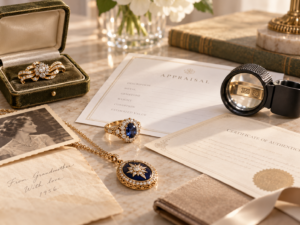
1. Understanding Your Jewelry’s True Value
One common mistake is assuming that the value of estate jewelry can be determined simply by weighing the gold and estimating the gemstones. For more common pieces this is often the case.
However, for some jewelry, precious-metal value is certainly important, but better estate pieces often need to be evaluated by a professional on several levels.
A knowledgeable buyer should consider the maker or designer, gemstone quality, period, construction, condition, rarity, provenance, and current collector demand in addition to the intrinsic value of the materials.
This is particularly important with signed jewelry, antique pieces, unusual gemstones, period diamond cuts, handcrafted jewelry, and pieces by designers whose work has an established secondary market.
A classic example would be an antique platinum diamond ring may be worth considerably more intact than the individual sum of its platinum and diamonds. The same can be true of a signed brooch, Native American jewelry, or a discontinued designer collection.
How to ensure you’re getting a strong offer: Have your pieces evaluated by someone local ,established and experienced with estate and antique jewelry. Avoid gold-buying flyers, traveling gold buyers or online estimates. If you use these services, ensure they pay 80% or better for the gold value of your items.
2. Condition – Sometimes Tarnish is a Good Thing
Condition matters, but this is an area where sellers can unintentionally make matters worse.
Loose stones, worn prongs, previous repairs, missing components, damaged clasps, chips, heavy wear, or alterations can all affect value. At the same time, not every vintage piece should be polished until it looks new.
With antique jewelry in particular, original finishes, patina, construction methods, and period components can be part of what makes the piece desirable.
Aggressive polishing can remove metal and soften engraved details. Amateur repairs can alter an original setting. Improper cleaning can damage porous gemstones, enamel, pearls, foil-backed stones, or other delicate materials.
Even something as seemingly harmless as putting an antique ring into an ultrasonic cleaner may be inappropriate for certain stones or settings.
Its easy to avoid this mistake: Have estate jewelry professionally inspected before cleaning, polishing, resizing, or repairing it. In many cases, the best decision is to leave a piece exactly as it is until its significance has been determined.
3. Compare Buyers and Selling Options
Two reputable buyers can look at the same piece of jewelry and arrive at very different offers.
Different buyers have different customers, specialties, inventories, and ways of selling jewelry. A buyer who primarily purchases gold may value a piece largely for its metal and stones. An estate jeweler may recognize a maker, period, or design that makes the piece worth preserving intact.
Likewise, certain items may perform better through a specialized auction, consignment arrangement, private sale, or direct purchase.
The highest theoretical selling price is not always the best choice, either. Consignment or auction may potentially produce more money, but requires more time and involves commissions and doesn’t guarantee a sale. A direct purchase provides immediate payment and eliminates the wait.
The important thing is understanding why an offer is what it is.
Compare your options: When selling a significant piece or collection, look for a buyer who can explain how the item was evaluated and if there may be a better market and if it is simply selling it for its components or for its intrinsic value.
4. Keep the Box and Papers
When families begin sorting jewelry, paperwork often ends up in one pile and the jewelry in another.
Keep them together.
Original boxes, receipts, certificates, laboratory reports, old appraisals, photographs, service records, correspondence, and family documentation can all provide useful information about a piece and potentially add hundreds or thousands in value.
For designer jewelry, an original box or paperwork may help establish how and when an item was purchased. For gemstone jewelry, a laboratory report may contain important identification about its origin or grading information. With antique jewelry, even an old family photograph showing someone wearing the piece can help establish provenance.
Documentation does not automatically make jewelry valuable, but it can provide clues that lead to a more accurate identification.
The same applies to the jewelry itself. Do not overlook small hallmarks, signatures, inventory numbers, assay marks, or maker’s marks. A tiny stamp inside a ring or on the back of a brooch can completely change how a piece is viewed when examined by a skilled estate jewelry.
How to avoid this mistake: Bring everything connected with the jewelry when having it evaluated—even paperwork that appears old or unimportant. Let the evaluator decide what is relevant.
5. Rushing the Sale or Letting Emotions Drive the Decision
Estate jewelry often has two very different kinds of value: financial value and personal value.
They are not always the same.
A ring that was treasured by a grandmother may have enormous importance to the family even if its market value is relatively modest. Conversely, an item no one in the family recognizes may turn out to be one of the more valuable pieces in the collection.
This becomes especially important when jewelry is being divided or sold as part of an estate.
Urgency can create problems as well. Sellers who feel they need to make an immediate decision may accept an offer before understanding what they own. Others may hold onto jewelry based on an unrealistic expectation created by an old insurance appraisal or an original retail receipt. Neither approach is ideal.
Insurance replacement values, retail asking prices, auction estimates, and the amount an experienced estate buyer will pay are different measurements of value.
Give yourself enough time to understand the jewelry before deciding what to keep, sell, redesign, consign, or distribute among family members. A good estate evaluation should provide information—not pressure you into making an immediate decision.
Knowledge is Key
Selling estate jewelry should begin with understanding what you have.
Sometimes the answer is straightforward: the principal value is in the gold, platinum, diamonds, or gemstones. Other times, the real value lies in a signature, an unusual stone, an antique mounting, exceptional craftsmanship, or a market that may not be obvious at first glance.
At Eco Estate Jewelry, we evaluate jewelry piece by piece to identify its significance. Our goal is to explain what you have, how we arrived at our evaluation, and what options may make sense for you.
If you are considering selling a single piece, an inherited collection, or the contents of an estate, booking a private evaluation with one of our experts is a good place to begin.