Natural Earth-Mined, Laboratory-Grown & Treated Diamonds: A Buyer’s Guide
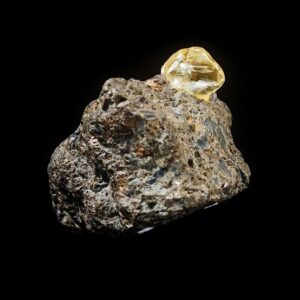
A natural diamond is one of the oldest physical objects you will ever touch. Most formed between one and three billion years ago deep in the Earth’s mantle under immense temperature and pressure, remaining hidden until ancient volcanic eruptions blasted them toward the surface in structures known as kimberlite pipes.
Long before diamonds became modern engagement symbols, ancient cultures revered them for their durability and rarity. Ancient Greeks believed diamonds were tears of the gods; Egyptians associated them with the sun and divine power; and records from ancient India around 800 BC celebrated them as protective talismans.
Some statistical estimates suggest that if all the gem-quality, earth-mined diamonds over one carat ever mined were gathered together, they would occupy an area of roughly four square meters—roughly the volume of a residential hot tub.
With this level of geological rarity, understanding where modern lab-grown and treated stones fit into the landscape is essential.
Natural vs. Laboratory-Grown Diamonds
The primary question for any modern buyer is origin: Is this diamond natural or lab-grown?
A laboratory-grown diamond is not an imitation like cubic zirconia or moissanite. It is crystallized carbon sharing identical optical, chemical, and physical characteristics with natural diamond. The distinction lies entirely in geological timescale versus controlled manufacturing.
| Characteristic | Natural Earth-Mined | Laboratory-Grown |
|---|---|---|
| Origin | Earth’s mantle (100+ miles deep) | Controlled laboratory chamber |
| Time to Form | 1 to 3+ billion years | 2 to 6 weeks |
| Composition | Pure crystallized carbon | Pure crystallized carbon |
| Market Value / Resale | Retains sustained resale value | Depreciating secondary market value |
| Supply | Geologically finite | Industrially reproducible |
Production Methods
- High Pressure, High Temperature (HPHT): Replicates natural mantle conditions. A diamond seed crystal is positioned with a pure carbon source inside a specialized hydraulic press reaching pressures over 50,000 atmospheres and temperatures above 1,300°C. Molten metal solvent dissolves the carbon, precipitating it onto the seed.
- Chemical Vapor Deposition (CVD): Places diamond seed plates in a vacuum chamber filled with hydrocarbon gas (such as methane). Microwave energy ionizes the gas into plasma, breaking carbon atoms free to deposit layer by layer onto the seed.
Can You Tell the Difference by Eye?
No. To the unaided eye—and often under a standard 10x jeweler’s loupe—a high-grade lab diamond is indistinguishable from an earth-mined diamond.
Accurate identification relies on growth patterns, trace elements (such as nitrogen aggregates), distinct fluorescence reactions, and photoluminescence spectroscopy evaluated on specialized gemological equipment.
Has the Diamond Been Treated?
Origin and treatment are separate variables. Both earth-mined and lab-grown stones can undergo post-growth enhancement to improve their visual grade.
Treatments are standard across the jewelry industry, provided they are fully disclosed prior to purchase. Undisclosed treatments directly misrepresent market value, durability, and rarity. Depending on the type of treatment, the value of the diamond can be reduced 50% or more. Historically, treated diamonds were a means for the consumer to obtain a larger diamond at a discounted price. The introduction of lab diamonds has all pushed many of these treated diamonds out of main market channels.
The main varieties of treatment we will be reviewing are ways of enhancing a diamonds color and different means of improving the clarity of natural diamonds.
Color Enhancements
- Surface Coating: A micro-thin layer of coloring agent or chemical film is applied to the pavilion or girdle. Coatings mask yellow tints or introduce fancy colors. Because the layer is superficial, it can scratch, wear off, or react poorly to ultrasonic cleaning.
- HPHT Color Treatment: High-pressure, high-temperature annealing alters lattice defects in existing stones. It can decolorize brown stones to colorless grades, or transform them into vivid yellows, greens, and pinks. This change is permanent and requires spectroscopic screening to identify.
- Irradiation & Annealing: High-energy electron or gamma bombardment shifts carbon atoms, modifying light absorption to create stable fancy colors (greens, blues, deep yellows, and treated blacks).
Clarity Enhancements
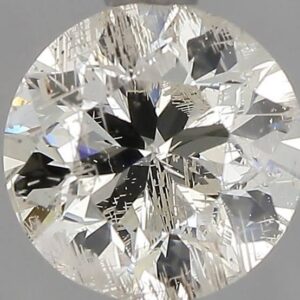
- Laser Drilling: A fine laser beam burns a microscopic conduit from the diamond’s facet surface to an internal dark inclusion. Acid is introduced through the channel to bleach or dissolve the spot. The channel is permanent, visible under magnification, and alters the stone’s natural clarity grade.
- Fracture Filling: Surface-reaching cracks or “feathers” are injected with a high-refractive-index molten glass compound. While this conceals breaks effectively, the glass filling can melt under the torch during routine jewelry repair or degrade in ultrasonic cleaners.
Why Disclosure Matters
In the end it comes down to the personal between a lab-grown diamond or an enhanced natural stone—each serves different budgets, priorities, and aesthetic goals. Problems only arise when a buyer pays believing they are purchasing a natural untreated diamond vs industrially produced or enhanced diamond.
At Eco Estate Jewelry, we employ dedicated gemological screening technology capable of differentiating natural diamonds from both CVD and HPHT lab-created stones, as well as detecting clarity and color alterations. Our skills associates can guild you through choosing the diamond of your dreams.
When shopping for an important stone:
- Verify origin on an accredited gemological report (GIA, IGI, or AGS).
- Ask whether any color or clarity treatments have been applied.
- Confirm that care and cleaning procedures account for any non-permanent treatments.